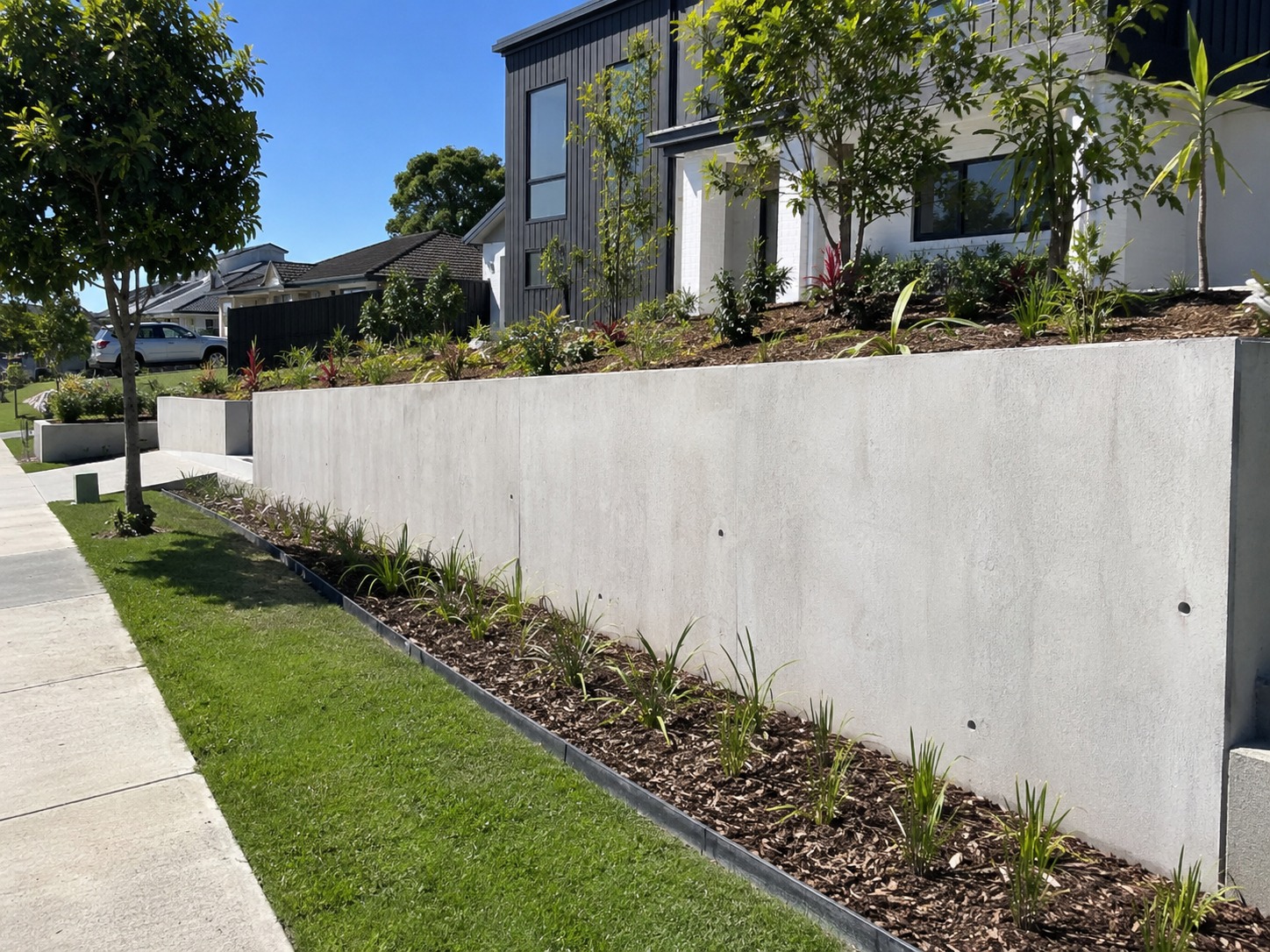
Understanding Stormwater Requirements for Concrete Projects
A concrete driveway or patio creates a large impermeable surface that water can no longer soak into the ground through, which means stormwater has to go somewhere else instead. Understanding how this is typically managed helps avoid drainage problems and potential compliance issues on your project.
Why Stormwater Matters for Concrete Projects
Before a driveway or patio is poured, that area of ground would usually absorb some rainfall naturally. Once it's covered in concrete, that water runs off the surface instead, and needs to be directed somewhere that doesn't cause problems for your property or your neighbours.
This becomes more significant for larger paved areas, properties on slopes, or those in parts of Tauranga where existing stormwater infrastructure is already under pressure during heavy rainfall events.
How Council Typically Assesses Stormwater Impact
Depending on the scale of your project, council may want to understand how additional impermeable surface will affect stormwater runoff, particularly for larger driveways, extensive patio areas, or properties where existing drainage is already a known issue.
This is generally more relevant for larger or more significant projects than a straightforward driveway replacement of similar size to what already exists, though it is still worth checking for your specific situation.
Common Stormwater Management Approaches
Options for managing additional stormwater runoff can include directing water to existing council infrastructure where capacity allows, on-site soakage where ground conditions are suitable, or permeable paving in some applications to reduce total runoff volume.
The right approach depends on your specific site, soil type, and the scale of the paved area being added, which is why a one-size-fits-all solution rarely applies across different properties in the region.
Designing Your Driveway with Drainage in Mind
Getting the fall and slope of your driveway right at the design stage is one of the simplest ways to manage stormwater effectively, directing water away from your home and toward an appropriate drainage point rather than letting it pool or run toward buildings.
This is far easier and cheaper to get right during the initial design and pour than to correct afterward, which is why drainage planning should happen alongside finish and layout decisions, not as an afterthought.
When to Involve Council or a Drainage Specialist
For straightforward residential driveway replacements of a similar size to the existing surface, stormwater is often a design consideration rather than a formal compliance step, but larger or more complex projects may benefit from an early conversation with council.
If your property already experiences drainage issues, or you're significantly increasing the paved area on your section, it's worth raising this with your contractor and, where appropriate, council before finalising your plans.
Impermeable Surface and Cumulative Impact
Council interest in stormwater is not only about a single project in isolation but also the cumulative effect of impermeable surfaces across a catchment area over time. As more properties in a neighbourhood add driveways, patios and other paved areas, the combined runoff can place additional pressure on shared stormwater infrastructure, which is part of why larger or more significant projects sometimes receive closer attention than a simple like-for-like replacement of existing paving.
This broader context is worth keeping in mind even if your individual project seems modest, since it helps explain why council may ask questions about drainage that might otherwise seem disproportionate to the size of your specific driveway or patio addition.
Practical Steps You Can Take on Your Property
Simple measures like ensuring garden beds and lawn areas retain their ability to absorb rainfall, avoiding unnecessary additional paving beyond what your project genuinely needs, and maintaining existing drainage channels and downpipes in good working order all contribute to responsible stormwater management on your property, independent of any formal requirements that may or may not apply to your specific project.
Discussing these considerations with your contractor at the design stage, rather than after the concrete has been poured, gives you the best chance of a driveway or patio that looks good, functions well, and manages water responsibly for the life of the surface.
Long-Term Drainage Performance
Even a well-designed drainage solution can lose effectiveness over time if channels become blocked with debris, downpipes are not maintained, or ground levels shift slightly due to settling nearby. Periodically checking that water still moves away from your concrete surfaces as originally intended helps catch small drainage problems before they become larger, more expensive ones.
This is a simple, low-cost habit that protects both your concrete surfaces and the broader stormwater system your property connects into, and it is worth building into your general property maintenance routine rather than only thinking about drainage during the original design and construction phase.
Stormwater is one of the less visible but genuinely important parts of planning a concrete project. We factor drainage into every driveway and patio we design, and we're happy to talk through what's relevant for your specific property.
← Back to all guides