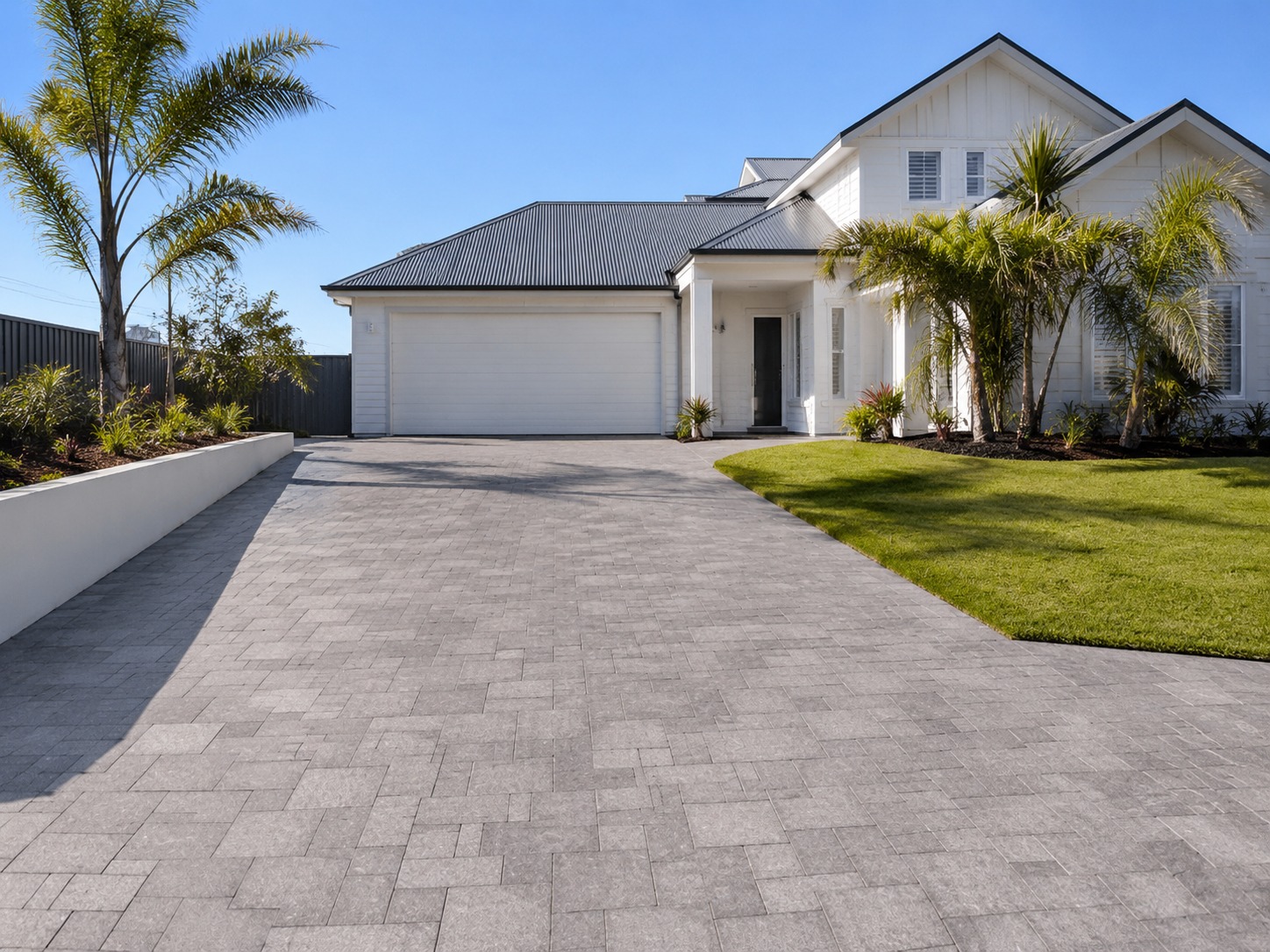
What Are the Driveway Width Requirements in Tauranga?
Driveway width might seem like a simple design decision, but in many cases it's also subject to council requirements, particularly where your driveway connects to a public road via a vehicle crossing. Here's a general overview of what typically influences driveway width requirements in Tauranga.
Minimum Width for Vehicle Access
Most residential driveways need to meet a minimum width to comfortably and safely accommodate a standard vehicle, with some additional allowance often required where the driveway serves multiple dwellings or a shared access arrangement.
Narrower driveways can create practical problems even where they technically meet minimum requirements, such as difficulty manoeuvring larger vehicles or reduced clearance for passengers getting in and out of a parked car.
Maximum Width and Crossing Limits
On the other end, vehicle crossings connecting to the road often have a maximum width as well, to limit the amount of footpath and berm affected and preserve space for pedestrians, street trees and other infrastructure nearby.
This means a wider driveway further back on your property doesn't automatically mean an equally wide crossing is permitted at the road, so it's worth checking both figures separately rather than assuming they match.
Shared Driveways and Multiple Dwellings
Properties with shared driveways, or those serving more than one dwelling, often have different width requirements to a standard single-dwelling driveway, since they need to accommodate more regular two-way traffic and potentially larger service vehicles.
If your project involves a shared access arrangement, it's worth confirming the specific width requirements early, since retrofitting a driveway that's too narrow for shared use later is far more disruptive than planning for it from the outset.
Practical Design Considerations Beyond the Minimum
Meeting the minimum width requirement doesn't always mean a driveway is genuinely comfortable to use day to day, particularly for larger vehicles, trailers, or households with multiple cars needing to pass each other.
It's worth thinking beyond the bare minimum during the design stage, considering how the driveway will actually be used, rather than only designing to the smallest width that technically satisfies council requirements.
Confirming Requirements for Your Property
Because width requirements can vary depending on your specific zoning, road classification and whether the driveway serves single or multiple dwellings, the most reliable approach is confirming directly with Tauranga City Council for your exact situation.
A contractor with local experience can also help flag likely requirements early in the design process, though final confirmation should always come from council for anything affecting the vehicle crossing or public road interface.
How Width Interacts With Slope and Turning Circles
On sloped sites, adequate width often becomes more important than on flat sections, since vehicles need enough room to correct their line slightly while driving up or down a gradient without running off the edge of the driveway. Steeper driveways can benefit from slightly wider construction than the bare minimum, particularly where the driveway curves or changes direction partway up a slope, giving drivers a genuine margin for error rather than a technically compliant but impractical width.
Turning circles and the ability to reverse safely onto the road, rather than reversing the full length of a long driveway, are also worth considering during the design stage, since this can influence the ideal width and layout beyond what is strictly required by council standards for the crossing itself.
Planning for Future Needs
It is worth thinking ahead when settling on a final driveway width, considering whether your household's vehicle needs might change in the future, such as adding a second car, upgrading to a larger vehicle, or eventually needing to accommodate a trailer or small boat. Widening a driveway later, after landscaping and other features have been established around it, is considerably more disruptive and expensive than building slightly wider from the outset if your budget allows for it.
This does not mean defaulting to the widest possible driveway regardless of cost, but rather having an honest conversation with your contractor about likely future use before finalising the design, so the decision is a considered one rather than something you wish you had thought about more carefully after the fact.
Width Alongside Landscaping and Boundary Constraints
On smaller sections, achieving your preferred driveway width may require balancing it against garden space, boundary setbacks or existing structures like fences and retaining walls, meaning the ideal width on paper is not always achievable once real-world constraints on your specific property are taken into account.
Working through these constraints with your contractor during the design stage, rather than after excavation has started, gives you the best chance of a driveway that meets both council requirements and your practical needs within the space actually available on your section.
Getting driveway width right balances council requirements with genuine everyday practicality. If you're planning a new driveway and want help thinking through both, we're happy to talk through your site and how it will be used.
← Back to all guides