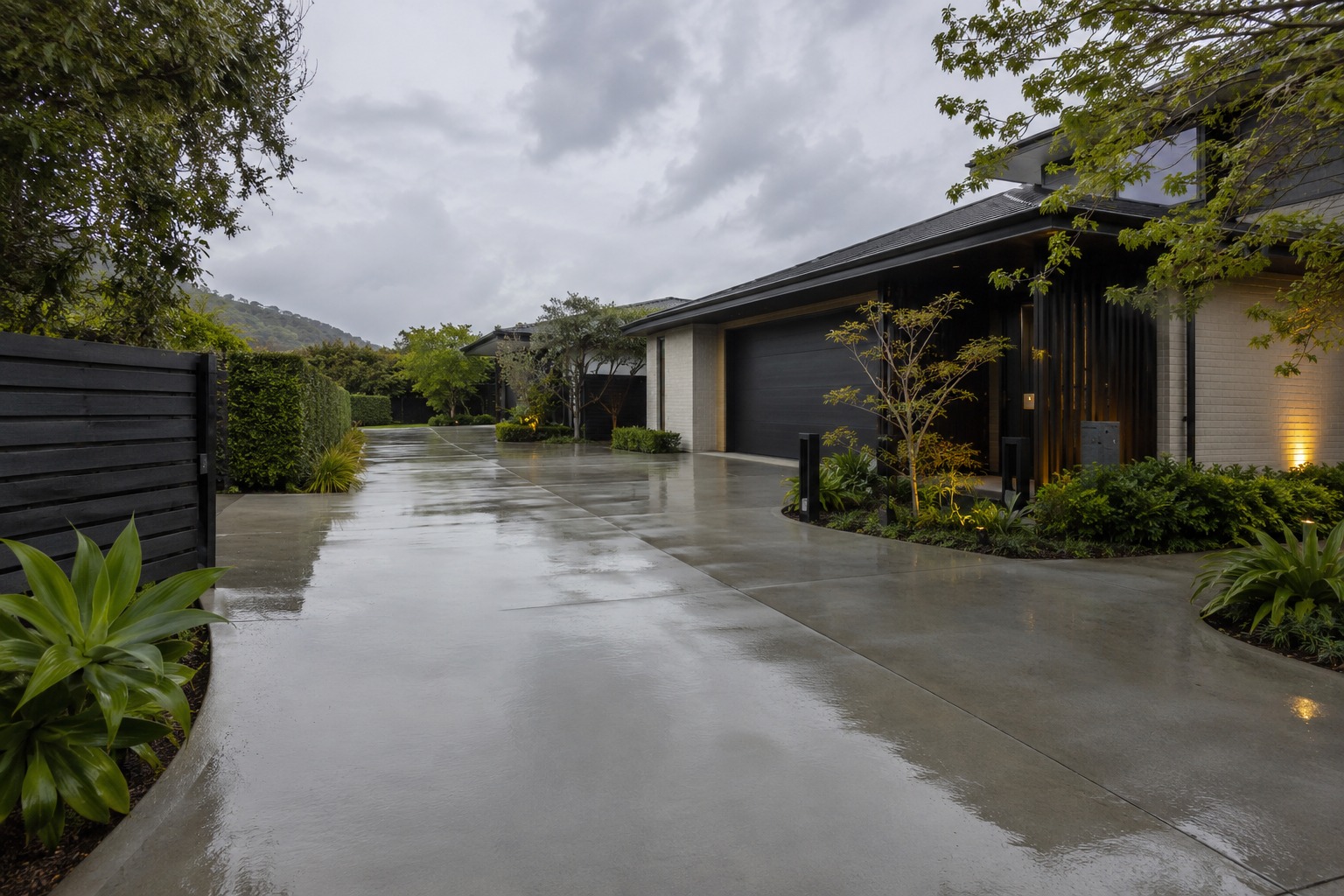
Everything Homeowners Should Know Before Installing a Concrete Driveway
Installing a new concrete driveway involves more decisions than most homeowners expect going in. Beyond simply choosing a finish, there are questions of council requirements, site preparation, timing and budgeting that all affect the outcome. Here's a broad overview to help you approach the project with realistic expectations.
Understand What's Involved Before You Start
A concrete driveway project typically includes excavation, base preparation, reinforcement, the pour itself, finishing and a curing period, each of which affects both the cost and the timeline of your project in different ways.
Knowing this upfront helps you understand why quotes vary and why a driveway project takes longer from start to finish than the single day it might take to actually pour the concrete on site.
Council and Consent Considerations
Depending on the scope of your project, particularly if it involves a new or altered vehicle crossing, changes to stormwater drainage, or significant excavation, you may need to engage with council before work begins.
Checking this early avoids delays partway through your project, and a contractor with local experience can help you understand what is likely to apply to a project of your scale and location.
Choosing the Right Finish for Your Property
Plain, broomed, exposed aggregate, stamped and coloured finishes all offer different combinations of cost, appearance and maintenance, and the right choice depends on your budget, your home's style and how much upkeep you're willing to take on.
It's worth viewing physical samples before committing, since colours and textures can look quite different in person compared to photos, particularly under Tauranga's natural outdoor light conditions.
Site Preparation Is Where Quality Is Decided
The single biggest factor in how long your driveway lasts is the quality of the site preparation beneath it — proper excavation, a well-compacted base, and correct drainage planning all matter more than the concrete mix itself.
This stage is largely invisible once the job is finished, which is exactly why it's worth asking your contractor detailed questions about their preparation process rather than focusing purely on the finished appearance.
Budgeting and Timing Realistically
Beyond the base cost of materials and labour, budget for potential extras like site-specific excavation challenges, drainage work, or council fees, and build some flexibility into your timeline for weather-dependent pouring and curing.
A detailed, itemised quote and a realistic project timeline from your contractor upfront will save you from unpleasant surprises partway through what should be a straightforward home improvement project.
Weather and Seasonal Timing
Concrete needs settled, relatively mild conditions to cure properly, which means the timing of your pour can affect both the schedule and, occasionally, the finished result if not managed carefully. Tauranga's wetter winter months can introduce scheduling flexibility challenges, while very hot, dry summer days require extra attention to curing to prevent the surface drying out too quickly, which can affect strength and appearance if not properly managed by an experienced crew.
Being willing to shift your preferred pour date by a few days around unsettled weather, rather than insisting on a fixed date regardless of forecast, generally leads to a better outcome and gives your contractor room to protect the quality of the finished surface rather than rushing to meet an inflexible deadline.
Living With a New Driveway Day to Day
Once your new driveway is finished and fully cured, everyday use is generally straightforward, though it is worth adopting a few simple habits early on, such as avoiding aggressive chemical cleaners on decorative finishes and addressing any minor issues, like small cracks, promptly rather than leaving them to develop further over time.
Understanding roughly what maintenance your specific finish requires, and when you should expect to reseal it, sets realistic expectations from day one rather than being caught off guard a few years later when the driveway needs some attention to keep looking and performing its best.
Working With Your Contractor as a Partnership
The best outcomes tend to come from treating your contractor as a partner in the project rather than simply a service you have booked, sharing relevant details about your property, your plans and any concerns openly so they can plan around them rather than discovering issues on the day.
A contractor who welcomes this kind of upfront conversation, and answers your questions thoroughly rather than brushing past them, is generally a good sign that the rest of the project will be handled with the same level of care and attention to detail.
A concrete driveway is a long-term investment, and taking the time to understand the full process before you start pays off in the finished result. We're happy to walk you through every stage for your specific property.
← Back to all guides