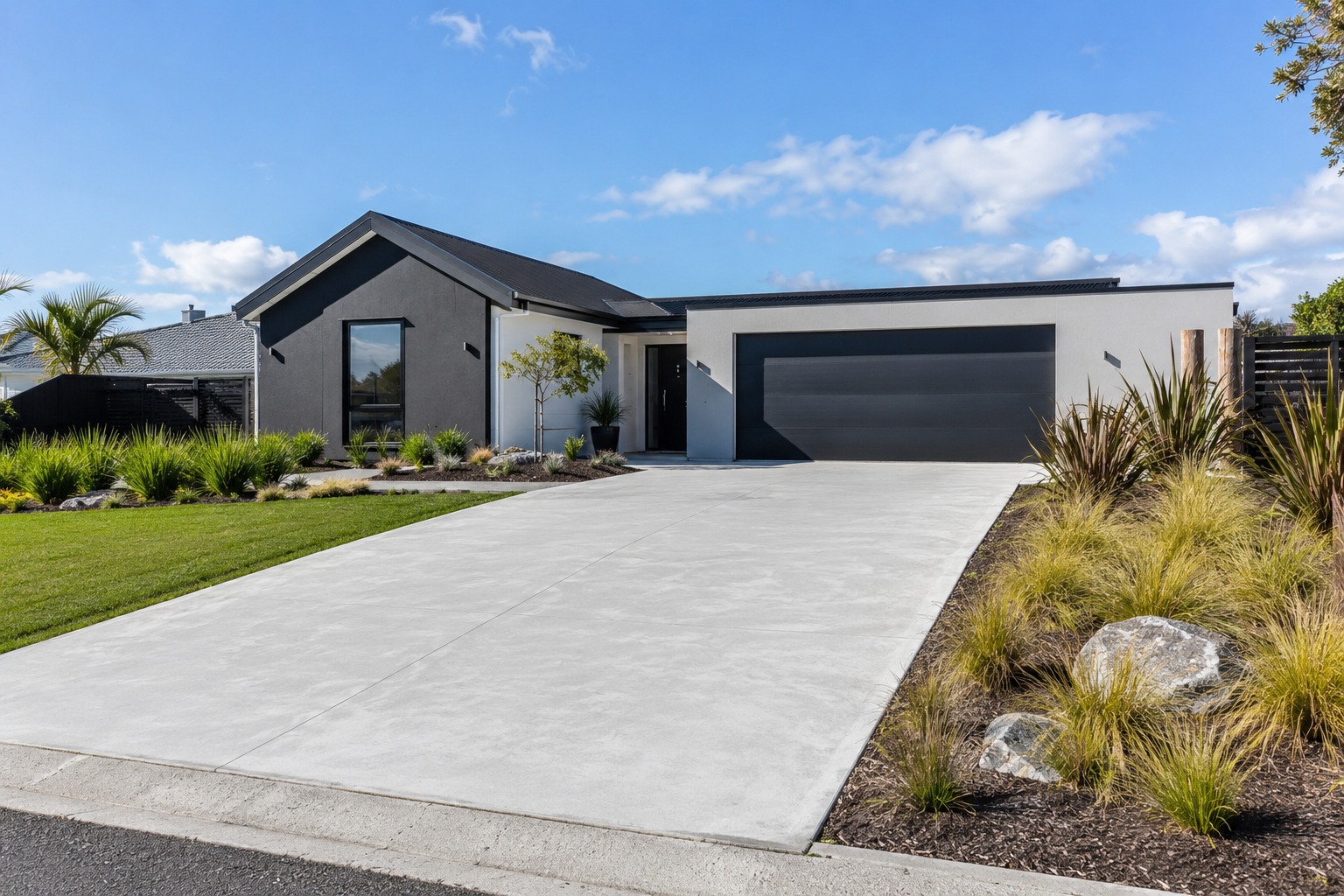
What Is the Best Concrete Finish for Coastal Homes?
Homes near the coast face conditions that inland properties simply don't — salt-laden air, higher humidity, and often sandy or free-draining soil. These factors don't rule out any particular concrete finish, but they do change what's worth prioritising when choosing one for a coastal Tauranga or Mount Maunganui property.
Why Coastal Conditions Matter for Concrete
Salt air can accelerate the corrosion of any exposed or shallow reinforcing steel over time, and it can also affect how quickly sealers wear and how often surfaces need cleaning to prevent salt residue building up. None of this makes concrete unsuitable near the coast, but it does mean a few extra considerations are worth factoring in.
Humidity and higher moisture levels can also mean coastal surfaces take slightly longer to fully dry between weather events, which is worth considering for slip resistance, particularly around entrances, pool areas and anywhere bare feet are common.
Finishes That Perform Well Near the Coast
Exposed aggregate remains a strong choice for coastal properties, offering good slip resistance and a naturally textured surface that handles salt exposure and humidity well, particularly when properly sealed to protect against staining and moisture absorption.
A broomed finish is another solid, low-maintenance option for coastal driveways, offering reliable grip without the additional cost of aggregate exposure, and it tends to hide the fine salt residue and dust common in beachside areas better than a smooth surface.
Sealing Matters More Near the Coast
Sealing is important for any concrete surface, but it plays an even bigger role near the coast, where salt exposure and higher humidity increase the risk of surface staining and gradual wear if concrete is left unprotected for extended periods.
A quality penetrating or film-forming sealer, reapplied on schedule, significantly reduces salt and moisture absorption into the surface, helping decorative finishes in particular hold their colour and texture despite the harsher coastal environment they're exposed to.
Reinforcement and Base Preparation for Coastal Sites
Coastal properties often sit on sandier, more free-draining soil, which can behave differently under load compared to inland clay-based ground. Proper base compaction remains just as critical, if not more so, to prevent settling or movement over time.
Where reinforcing steel is used, ensuring adequate concrete cover over the steel is particularly important near the coast, reducing the risk of long-term corrosion from salt exposure reaching the reinforcement within the slab over the years ahead.
Colour and Finish Considerations Near the Coast
Lighter colours and finishes can help coastal driveways stay cooler underfoot during summer, while also complementing the bright, open aesthetic common to beachside properties. Darker colours will absorb more heat and can show salt residue and dust more visibly between cleans.
Stamped and coloured concrete can still work well near the coast, provided sealing is kept up to date, since UV exposure and salt air both accelerate colour fading on decorative finishes more than they would on a typical inland property further from the sea.
Maintenance Routine for Coastal Properties
A more frequent wash-down routine is worth adopting for coastal driveways, since salt residue that is left to accumulate can gradually affect both the appearance and the performance of a sealer over time, particularly in areas exposed to onshore winds.
Checking your sealer's condition more regularly than you might inland is a simple habit that protects your investment, since the combination of salt, sun and moisture near the coast puts more demand on protective coatings than a typical inland environment would.
Choosing a Contractor Experienced With Coastal Sites
Not every contractor has the same level of experience working on coastal or beachside properties, and this experience matters when it comes to specifying the right cover over reinforcing steel, recommending appropriate sealers, and understanding how local wind and salt exposure patterns affect a specific site.
Asking a potential contractor directly about their experience with coastal properties, and asking to see examples of previous coastal work, is a reasonable way to gauge whether they understand the additional considerations involved before committing to a quote for your project.
Planning Ahead for a Coastal Driveway Project
If you are planning a new driveway for a coastal property, raising these considerations with your contractor at the quoting stage, rather than after the pour, gives you the best chance of a finish that holds up well against the specific conditions your property faces.
A short conversation about sealing schedules, reinforcement cover and finish choice upfront costs nothing, but can meaningfully extend how long your driveway looks and performs its best in a coastal environment compared to a standard, one-size-fits-all approach.
Coastal conditions don't mean compromising on style or durability — they just mean a few extra considerations around sealing, finish choice and reinforcement cover. If you're planning a driveway for a coastal Tauranga or Mount Maunganui property, we're happy to recommend the right approach for your specific site.
← Back to all guides