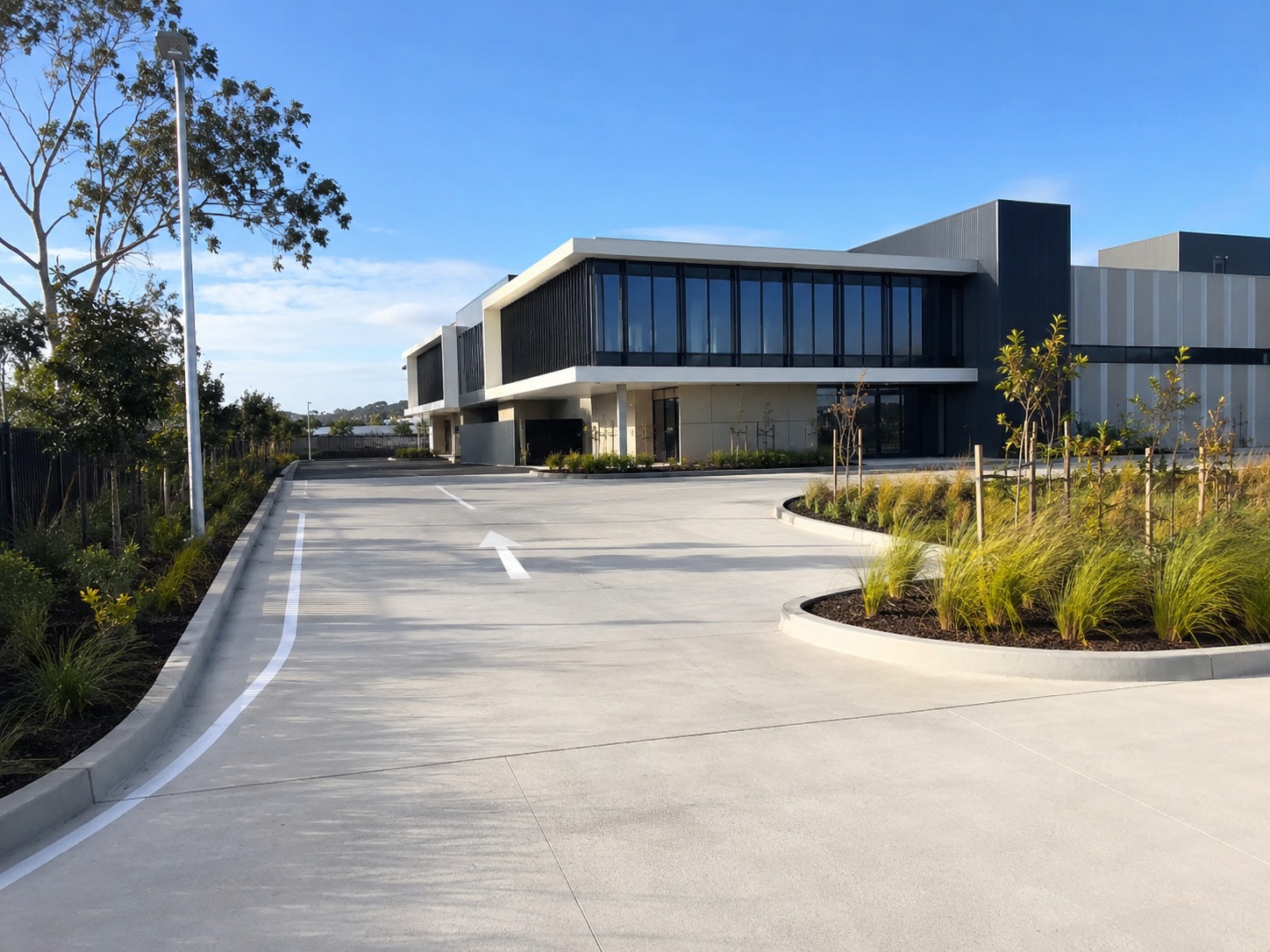
Commercial Concrete Driveways: What Tauranga Business Owners Need to Know
Commercial concrete driveways and access ways face different demands to a typical residential driveway — heavier vehicles, more frequent traffic, and often stricter compliance requirements. If you're planning a new commercial concrete project or upgrading an existing one, there are a few key considerations that shouldn't be overlooked before work begins.
Designing for the Right Load
Commercial sites often need to accommodate trucks, forklifts, delivery vehicles and heavy foot traffic, all of which place significantly more stress on a slab than typical residential use. This means commercial concrete generally needs to be thicker, more heavily reinforced, and built on a more robustly compacted base than a standard driveway.
Getting the design load right from the outset is critical — underspecifying a commercial slab is one of the most common causes of premature cracking and costly early repairs.
Compliance and Site Planning
Commercial projects are more likely to require council consent, particularly where they affect stormwater management, access to public roads, or accessibility requirements for customers and staff. It's worth confirming these requirements early, since they can affect both design and timeline.
Drainage planning is especially important on commercial sites, where larger paved areas mean more stormwater needs to be managed correctly to avoid pooling or runoff issues affecting neighbouring properties.
Minimising Disruption to Your Business
Unlike a residential driveway, a commercial concrete project often needs to work around ongoing business operations, customer access and delivery schedules. Planning the pour and curing time around your business's quieter periods can significantly reduce disruption.
Staged pours, allowing part of a site to remain accessible while another section is worked on, can also help keep a business operating with minimal interruption during a larger commercial concrete project.
Choosing the Right Concrete Mix
Commercial applications often call for a higher-strength concrete mix than standard residential work, particularly where heavy machinery, forklifts or frequent truck traffic are expected. The right mix design balances strength, workability and finish, and should be specified based on actual expected use rather than a generic default.
For sites with chemical exposure, such as workshops or industrial yards, additional considerations like surface sealing or specialised finishes may also be worth discussing upfront, since retrofitting this kind of protection later is far more disruptive than including it in the original specification.
Curing time is another factor commercial clients often underestimate — a higher-strength commercial mix still needs the same patient curing period as residential concrete, and rushing vehicles or equipment onto a slab too early can undermine its long-term performance regardless of how good the mix design was. Planning this curing window into your overall project timeline from the outset avoids unnecessary pressure to reopen a site before it's genuinely ready.
Commercial concrete work requires a different level of planning than residential driveways, from load design and mix selection through to managing disruption during construction and allowing proper curing time. If you're planning a commercial project, we're happy to talk through your site's specific requirements and timeline.
← Back to all guides