Concrete vs Asphalt Driveways: Which Is Right for Your Tauranga Home?
Concrete and asphalt are the two most common driveway materials in Tauranga, and both can deliver a durable, good-looking result when installed correctly. The right choice depends less on which material is objectively "better" and more on your budget, timeline, and how you plan to use the space, since each has real strengths and trade-offs worth understanding before you commit.
Upfront Cost and Installation Time
Asphalt is generally cheaper to install than concrete and can often be laid and ready for light use more quickly, since it doesn't need the same lengthy curing period. This makes it an appealing option for homeowners working to a tighter budget or timeline, particularly for larger driveway areas where material costs add up.
Concrete typically costs more upfront and needs around 28 days to fully cure, though it can usually take foot traffic within a day or two and light vehicle use within a week. That higher initial cost is generally offset by lower long-term maintenance and a longer lifespan, which is worth factoring into the true cost comparison.
Durability in Tauranga's Climate
Concrete tends to perform better through Tauranga's warmer months, since asphalt can soften slightly under sustained heat and is more prone to rutting under heavy or repeated loads. Concrete's rigidity also means it holds its shape well over time, provided the base beneath it was properly compacted before the pour.
Asphalt has its own advantages in flexibility, coping reasonably well with minor ground movement without cracking as visibly as concrete can. However, it generally requires more frequent resealing and resurfacing to stay in good condition, particularly under UV exposure and consistent vehicle weight.
Appearance and Design Options
Concrete offers far more design flexibility, with finishes ranging from plain and broomed through to exposed aggregate, stamped patterns and integral colour options. This makes it the better choice if kerb appeal and a decorative finish are priorities for your property.
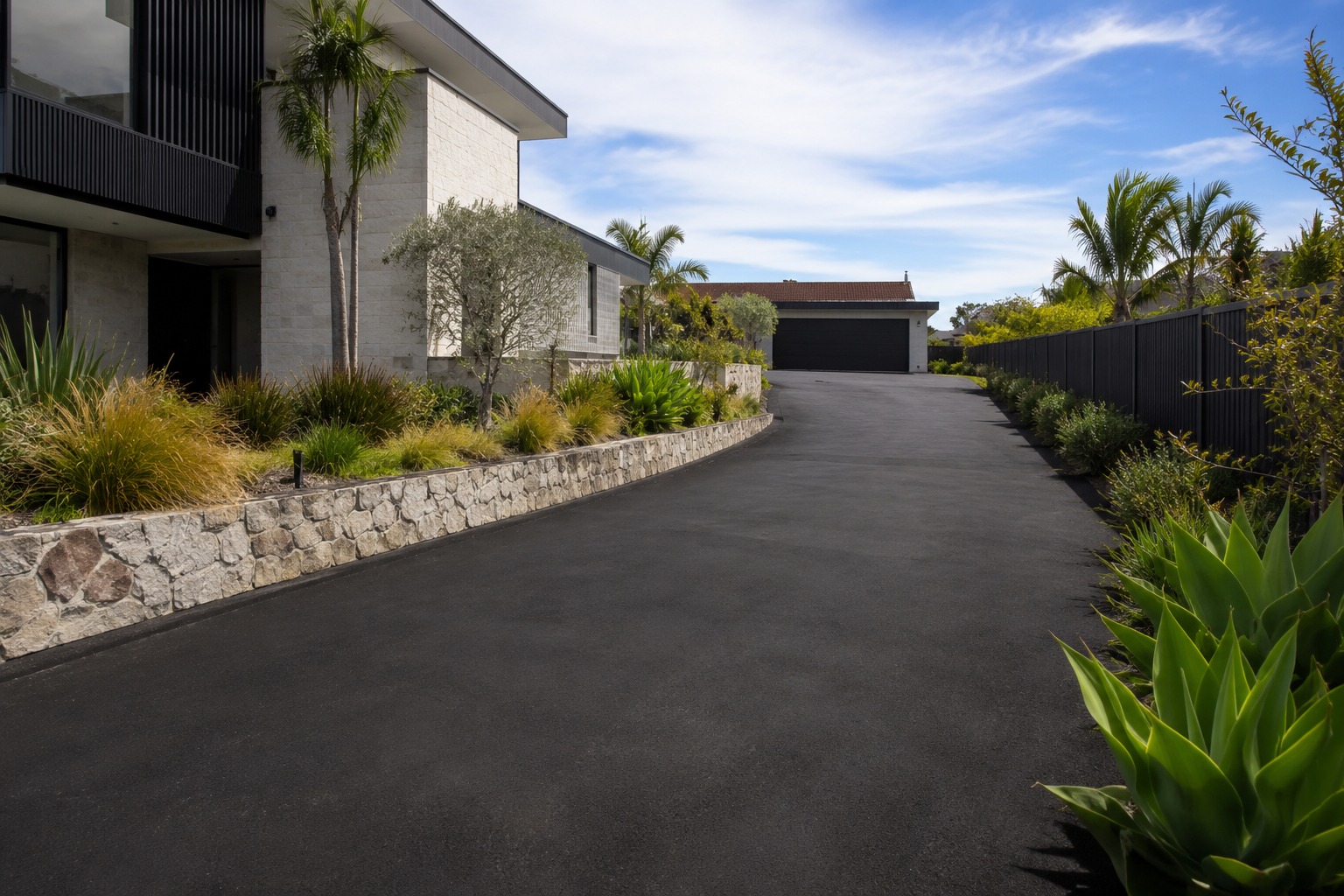
Asphalt is more limited in appearance, typically finished in a uniform dark grey or black surface. It can still look sharp and tidy, particularly for larger commercial or utilitarian driveways, but it will not offer the same range of decorative choices concrete provides.
Repairs and Long-Term Running Costs
Concrete repairs, when needed, are typically localised — a crack can be routed and sealed, or a section levelled or resurfaced, without disturbing the rest of the driveway. Asphalt repairs tend to blend in less neatly, and patched sections can remain visible even after a good repair job.
Over a twenty or thirty year timeframe, asphalt usually needs resealing every few years and resurfacing at least once, while a well-installed concrete driveway often needs little beyond occasional sealing. When you add up the total cost of ownership rather than just the install price, concrete frequently comes out ahead.
If long-term durability, design flexibility and lower lifetime running costs matter most, concrete is usually the stronger long-term investment. If upfront cost and a faster install are the priority, asphalt remains a solid, practical option. We install both, so we are happy to talk through which fits your project and budget.
← Back to all guides