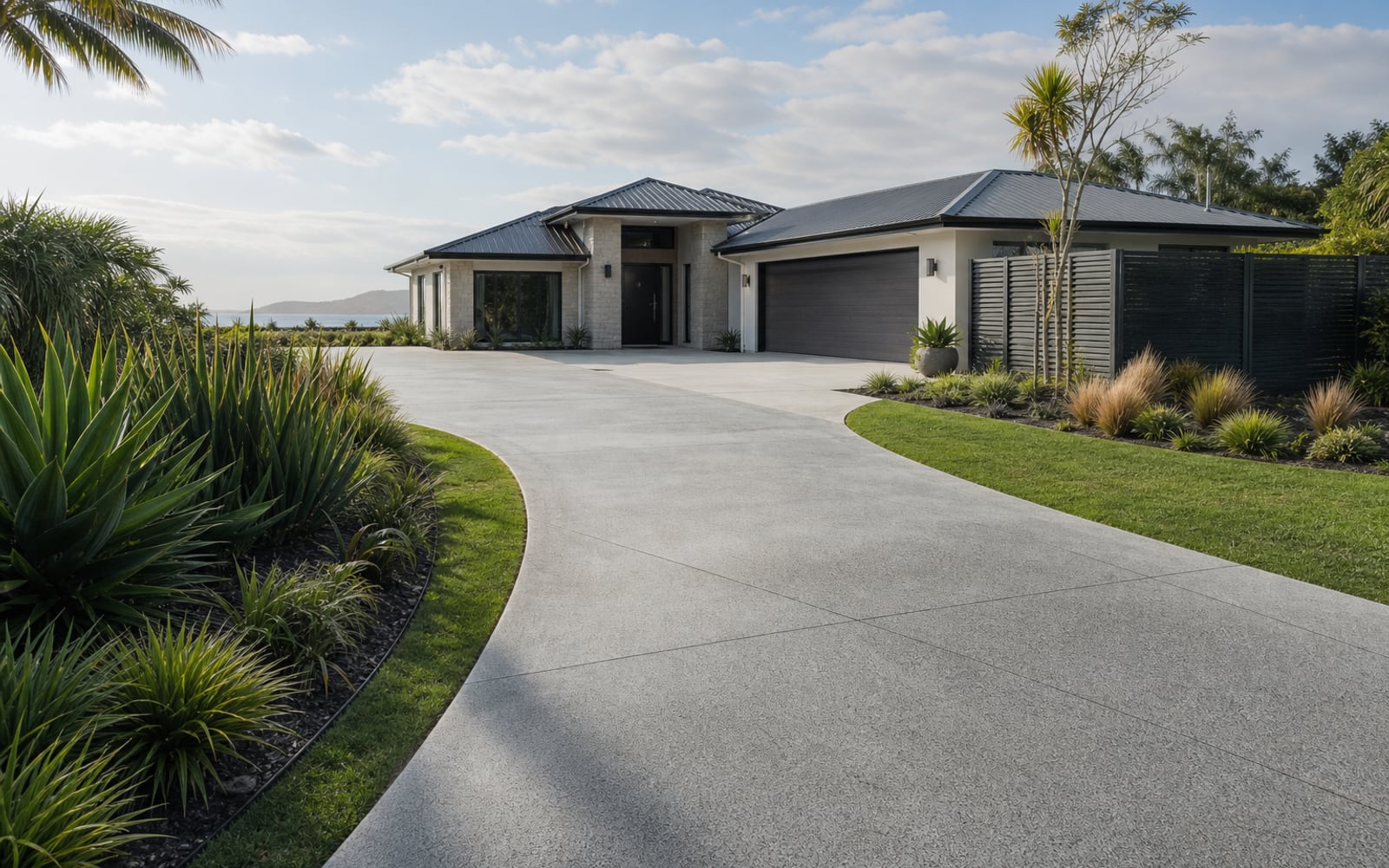
Planning a New Driveway? Here's Your Pre-Pour Checklist
A new driveway is a significant investment, and a little planning before the pour goes a long way toward avoiding delays, unexpected costs and disappointment with the finished result. Whether you're replacing an old driveway or pouring one for the first time, working through a short checklist beforehand makes the whole process smoother for everyone involved.
Confirm Access, Boundaries and Consent
Before anything else, confirm your property boundaries and check whether your project needs council consent, particularly for larger driveways, commercial access or work near council infrastructure like footpaths and stormwater drains. It's also worth checking access for machinery and concrete trucks, especially on tighter sections or shared driveways.
If underground services such as power, water or gas lines run near the planned driveway area, these need to be identified before excavation begins. A quick check early on avoids costly delays or damage once digging is underway.
Think About Drainage and Slope
Water needs somewhere to go, and getting the fall and drainage right is one of the most important parts of the planning process. A driveway that slopes toward your home, a garage or a low point on the property will cause ongoing problems, so this needs to be addressed at the design stage, not after the pour.
If your property sits on a slope or has drainage challenges already, mention this early so it can be factored into the design, potentially including channel drains or adjusted grading to keep water moving away from buildings and neighbouring properties.
Decide on Finish, Budget and Timing
Settle on your preferred finish, colour and any decorative elements before the quote stage, since this affects both pricing and the materials ordered for the job. It's much easier to make these decisions calmly in advance than under time pressure once the crew is on site.
Finally, confirm your budget range and preferred timing, keeping in mind that concrete needs settled weather for the pour and a proper curing period afterward. Being flexible by a few days either way, particularly during wetter months, helps ensure the best possible result.
Choose a Contractor Who Explains Their Process
Once you're clear on the details above, get quotes from a couple of contractors and ask specifically how they'll prepare the base, what reinforcement they'll use, and how they plan control joints. A contractor who can answer these questions clearly and confidently is generally a good sign.
Be wary of quotes that are dramatically cheaper than the others without a clear explanation of what's been left out. In our experience, the price difference almost always comes down to corners cut on preparation, thickness or reinforcement, all things that determine how long your new driveway will actually last. Ask to see photos of previous completed jobs and, where possible, driveways they installed several years ago rather than only recent work.
Working through these points before you get quotes means you'll receive more accurate pricing and a smoother installation overall, with far fewer surprises once work gets underway. If you're ready to start planning your driveway, we're happy to walk through your site, answer any questions and talk through the details with you.
← Back to all guides