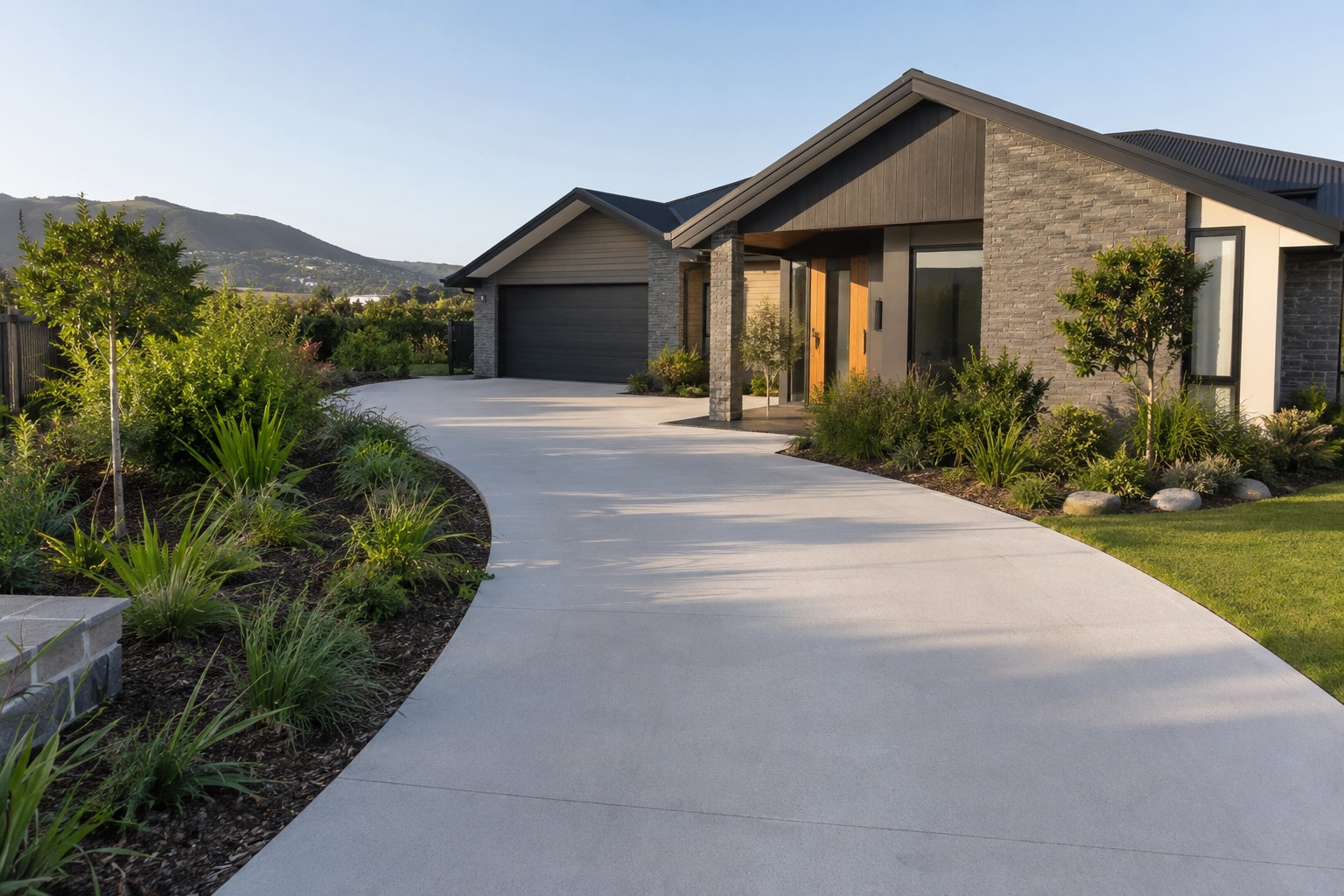
How Long Does a Concrete Driveway Really Last?
It's one of the most common questions we're asked, and the honest answer is: it depends. A well-built concrete driveway can comfortably last 30 to 40 years or more, but a poorly prepared one can start showing serious problems within just a few years. The difference almost always comes down to what happens before, during and after the pour, long before you ever park a car on it.
What Determines a Driveway's Lifespan
The biggest factor is what's underneath the concrete, not the concrete itself. A properly excavated, compacted base gives the slab the stable foundation it needs to resist cracking and settling for decades. Skimping on this stage is the single most common cause of driveways failing early.
Reinforcement, correct concrete thickness for the expected load, appropriate control joint spacing and unrushed curing all play a role too. Get these fundamentals right and a concrete driveway will comfortably outlast most other paving materials available.
Everyday Factors That Speed Up Wear
Heavy vehicles, particularly trucks, motorhomes and boat trailers, place more stress on a driveway than it may have originally been designed for. Tree roots growing beneath or alongside the slab are another major factor, often causing lifting or cracking years after the trees were planted.
Poor drainage that leaves water sitting on or seeping beneath the slab will also accelerate deterioration over time, particularly through repeated wet-dry cycles typical of Tauranga's climate.
Getting the Most Out of Your Driveway
Simple, regular maintenance goes a long way toward maximising lifespan. Periodic sealing protects against staining, moisture and UV damage, while addressing small cracks and settling early prevents minor issues from becoming major structural problems.
A driveway that's properly installed and reasonably maintained really can be a one-time investment for most homeowners, which is why getting the installation right from day one matters so much.
How Concrete Compares to Other Driveway Materials
Compared to asphalt, gravel or pavers, concrete generally offers the longest lifespan with the fewest structural surprises, provided the base preparation was done properly. Gravel needs regular topping up and grading, while pavers can shift, sink individually or grow weeds between joints over time.
Asphalt typically needs resurfacing within 15 to 20 years, while pavers may need partial relaying as the base beneath them settles unevenly. Concrete, by contrast, tends to age as a single unit, which is part of why it remains the benchmark for long-term driveway durability in most New Zealand climates.
This doesn't mean concrete is automatically the right choice for every property — budget, timeline and personal preference all matter too — but when longevity and low lifetime maintenance are the priority, it's difficult for other materials to compete on a like-for-like basis.
If your existing driveway is starting to show its age, or you're planning a new one and want it to last for decades rather than years, the fundamentals of proper preparation and quality installation are what really make the difference. We're happy to talk through your specific situation and give you a realistic idea of what to expect.
← Back to all guides